

11.11.2026Because Context is Key.
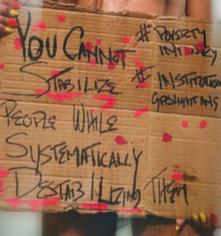


Welcome
Lets Start here….
When I needed help stabilizing my situation, I found myself having to fight just to get the help, answers, and coordination I needed.
Then came the eviction process.
I was suddenly trying to defend my housing, navigate a transfer, manage financial hardship, complete paperwork, attend appointments, and handle court proceedings without adequate resources or legal representation. All while trying to figure out what had happened to the stability I'd spent years working toward. The transfer took months. I eventually signed a new lease, but questions about my housing history, continuity of care, financial assistance, and the support I was supposed to receive remained.
And somewhere in the middle of all this, the focus seemed to shift.
Instead of the conversation being about what had gone wrong, what support had failed, what wasn't being addressed, and why I was struggling to keep everything together, I felt that the focus increasingly became my reactions to it all. My frustration became the story. My questions became the problem. My persistence became something to judge.
But my reaction didn't happen in a vacuum.
You cannot separate how someone reacts at the end of a prolonged crisis from everything that happened along the way. What people see at the hearing is one moment. They don't see the repeated attempts to get help, the problems I was trying to resolve, the uncertainty, the exhaustion, or the effort it took to keep going while my housing and support systems were falling apart around me.
I can't tell you what everyone intended, and I'm not asking anyone to accept every part of my account without question. I'm asking people to look at the whole sequence of events, the records, and the decisions that brought me here. Because when the person asking for help eventually becomes visibly frustrated, it's easy to make their behavior the entire story. It's much harder to go back and ask what happened before that moment, what went wrong, and whether the systems involved did what they were supposed to do.
“ I've learned that loneliness is bearable. That disappointment is inevitable. That trust and loyalty are remarkably hard to find, and even harder to hold onto. That relationships have cycles of their own, and that the end of a cycle doesn't always have to be sad, dramatic, or life-ending. But sometimes it is. My biggest fear when I entered this situation four years ago was that I didn't want it to change me. Looking back, that was a needless fear.
There was no way I could go through my world falling apart and come out unchanged.
The silver lining is the growth that happened along the way. While the world mostly saw the fragmented chaos, the mistakes, the breakdowns, and everything that looked messy from the outside, there was something else happening underneath it all.
I was learning. Growing. Adapting. Surviving.The person who walked into this four years ago is not the same person standing here today. Not because everything worked out the way it should have, but because it didn't.
Change was never the thing to fear. Stagnation was.
And despite everything that was lost, everything that broke, and everything that never should have happened, growth still found a way.”
THE RECORD | Timeline & Narrative Overview
Why These Documents Exist
THE RECORD is an evolving documentation project created to organize a complex history involving behavioral-health services, housing, referrals, service closure, HMIS records, eviction-related proceedings, safety concerns, and repeated attempts to obtain assistance.
The purpose is not to ask readers to accept every allegation or interpretation as established fact. It is to make the available record easier to examine by identifying what is documented, where accounts or records appear to differ, what remains unresolved, and what additional documentation is needed to clarify the history.
The project uses a consistent framework:
DOCUMENTED RECORD → DISCREPANCY → QUESTION → RECORD NEEDED
This framework is intended to distinguish recorded events from disputed information, identify gaps without assuming their cause, and give reviewers a concrete basis for further examination.
Development Timeline
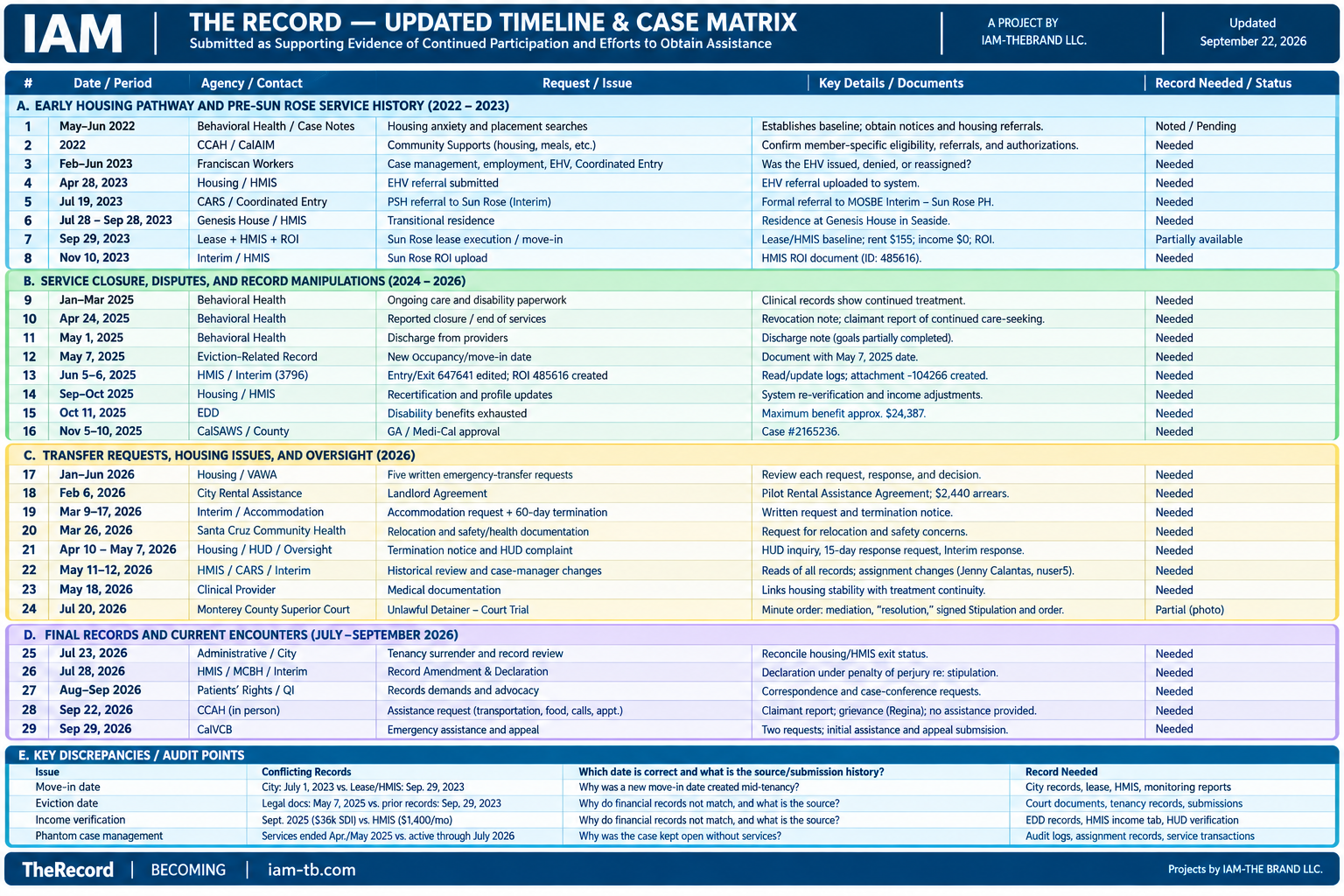
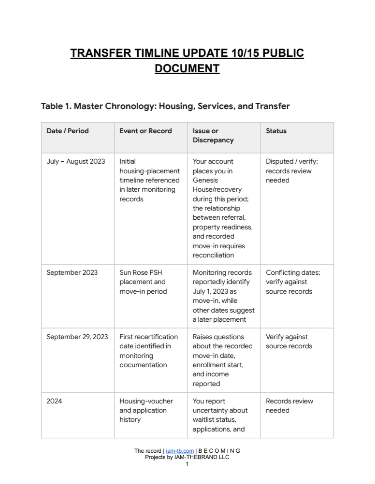
September 9, 2026 — Initial Updated Timeline Matrix
The first version organizes the known chronology and major record discrepancies. It brings together events across housing, behavioral-health services, referrals, HMIS activity, and related administrative processes.
Its primary purpose is to establish a usable chronology and identify where the available records raise questions requiring clarification. Rather than treating each event in isolation, it begins comparing dates, recorded statuses, reported actions, and missing supporting documentation.
Purpose: Establish the timeline, identify significant discrepancies, and create a structured foundation for further review.
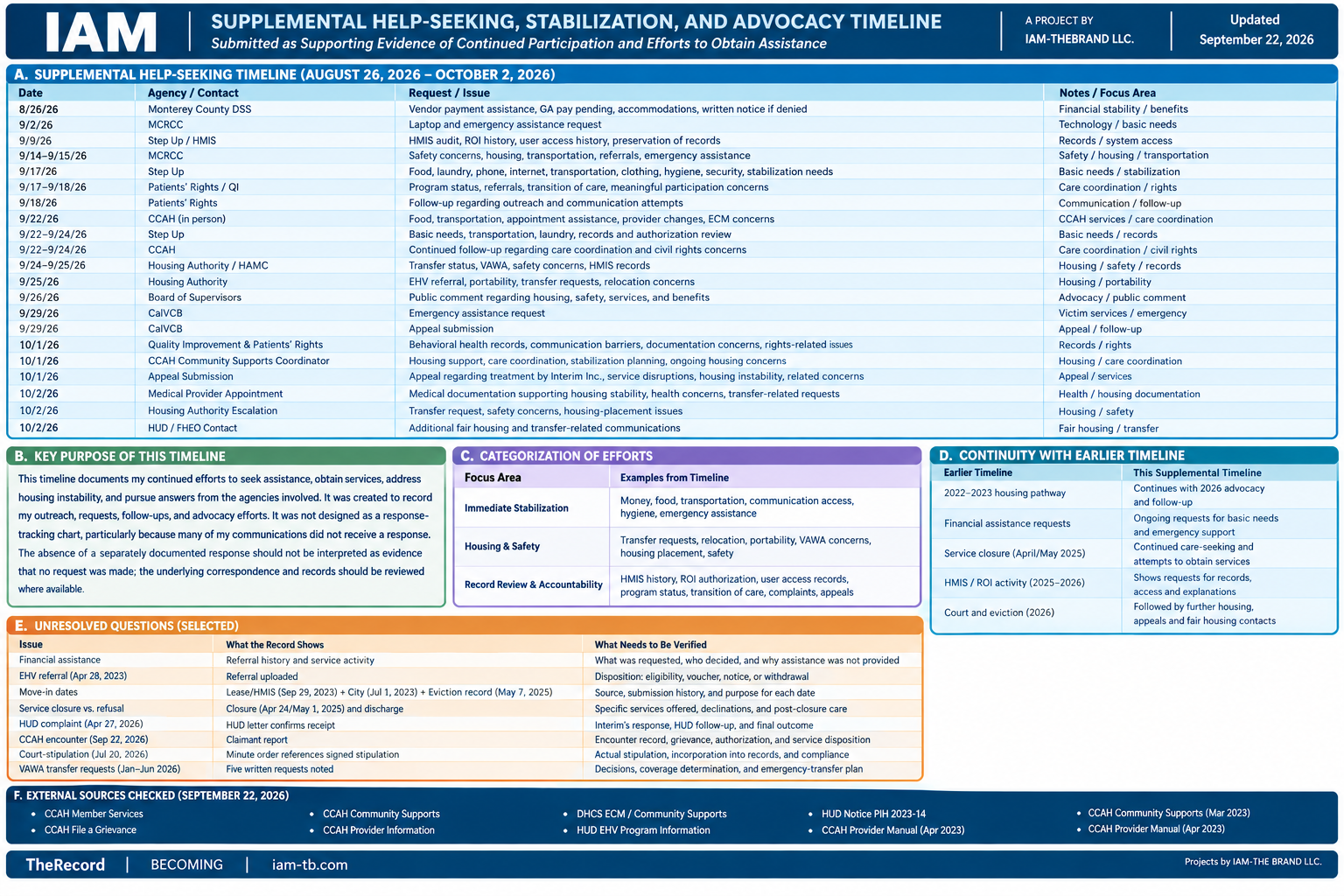
September 22, 2026 — Expanded Master Timeline & Case Matrix
The expanded version develops the initial framework into a broader cross-system record. It adds more detailed HMIS audit activity, a court-stipulation and record-integrity section, an expanded discrepancy matrix, policy and program cross-references, and additional questions concerning CCAH access and subsequent help-seeking.
It also more explicitly distinguishes between source-supported information, claimant-reported events, unresolved questions, and conclusions that cannot yet be drawn from the available material.
The expansion does not automatically establish that a discrepancy represents misconduct or that an agency violated a requirement. Instead, it identifies what must be verified before those questions can be answered responsibly.
Purpose: Move from a chronological account toward a more detailed, evidence-oriented framework for record reconciliation, oversight review, and public understanding.
Narrative Summary
The two versions document an effort to reconstruct a complicated sequence of events across systems that maintain different records, responsibilities, and decision-making processes.
The central questions concern how housing placement and behavioral-health services were coordinated; what happened around service closure and subsequent efforts to obtain help; how safety and relocation concerns were handled; how rent, subsidy, and eviction-related figures were calculated and communicated; and whether relevant records accurately reflect the events and decisions they describe.
The later version expands the inquiry into HMIS audit histories, court-related documentation, record amendments, information-sharing questions, and subsequent efforts to access assistance. These subjects are connected in the timeline, but the presence of activity in one system does not, by itself, establish what another system knew, received, or was required to do.
The documents therefore focus on traceable questions: What record supports a particular statement? When was it created or changed? Who recorded or communicated the information? What supporting material exists? Was a decision documented? If a record is missing, disputed, or incomplete, what can responsibly be concluded from that limitation?
The project also records attempts to seek assistance and clarification. An absence of a documented response does not prove why an agency did not respond, but it can establish that a question or request remained unresolved as of the date recorded.
How to Read the Matrix
Readers should distinguish among:
Documented events: Events supported by the records identified in the project.
Reported accounts: Statements describing what a person says occurred, which may require corroboration.
Discrepancies: Differences between dates, descriptions, classifications, or records that require reconciliation.
Missing or unverified information: Records or explanations that have not yet been obtained or independently confirmed.
Questions for review: Specific issues that can be clarified through source documents, audit histories, written explanations, or independent review.
A discrepancy is not automatically proof of error, intent, fraud, retaliation, or misconduct. Likewise, the existence of an entry in a system does not necessarily establish that its contents are accurate, that another party received it, or that a required action occurred.
The Purpose of Publishing THE RECORD
Publishing these materials makes the chronology and the questions arising from it more accessible to readers who were not involved in the underlying events.
The goal is to preserve a transparent record of the inquiry, make the complexity of the history understandable, identify unresolved issues, and support evidence-based review. The documents are intended to facilitate examination and accountability—not to substitute for an investigation, determine disputed facts in advance, or declare legal liability.
The central purpose is to make the record examinable: what it shows, what it does not show, what remains disputed, and what evidence is needed to understand the difference.
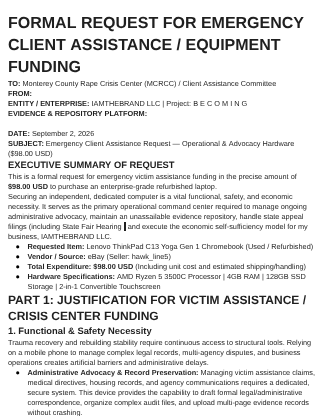
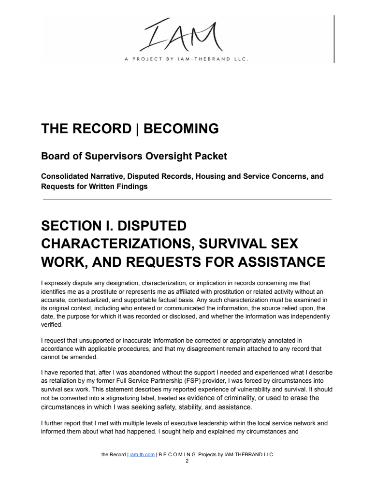
Updates 11/15/2026
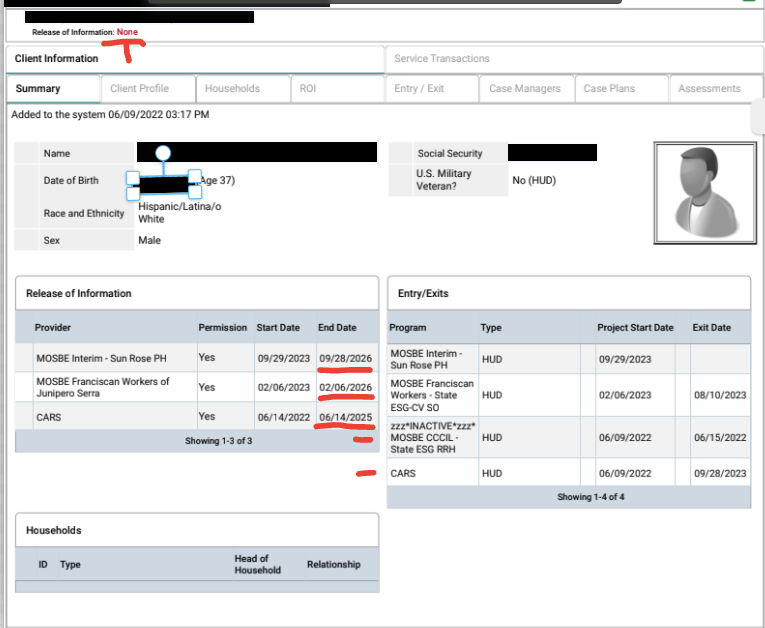
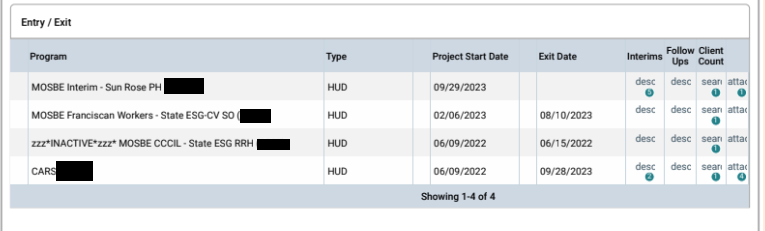
Client Summary: Enrollment and ROI Dates
Evidence: HMIS Summary screenshot
The client summary lists an Interim–Sun Rose PH enrollment beginning September 29, 2023, with no exit date displayed. It also lists an Interim ROI running from September 29, 2023, through September 28, 2026. The page header simultaneously displays “Release of Information: None.”
The purpose of this exhibit is to document those fields together and request clarification of their meaning and relationship. The screenshot does not establish whether the underlying records were deleted or whether the displayed fields reflect different system functions.
Service Transactions: Records 11–20
Evidence: June 2023 transactions
These pages display service and need entries dated June 7–28, 2023, under MOSBE Franciscan Workers – State ESG-CV SO. The listed categories include case management, credit counseling, debt management, and life-skills education.
These records document activity attributed to that provider during this period. They provide a comparison point for the service history visible before the Interim enrollment began.
Household History
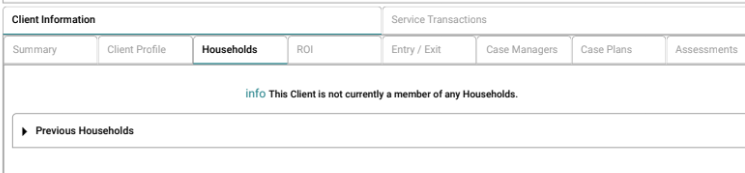
Evidence: Households tab
The page states that the client is not currently a member of any household and provides a collapsed “Previous Households” section.
This is not evidence that the housing placement or service history is missing. Household membership is a separate HMIS record category, and the page does not establish whether historical household records exist.